

The Denver Metro/North Front Range (DM/NFR) region has suffered from elevated concentrations of ground-level ozone (O₃) for decades. While progress has been made to reduce emissions, the area continues to fall short of National Ambient Air Quality Standards (NAAQS), leaving difficult decisions about further emissions reductions. Increasingly hot, dry summers, population growth, and wildfire smoke add to the challenge.
Regional air quality improvement plans formulated by the Regional Air Quality Council (RAQC), the designated lead air planning agency for the O₃ Nonattainment Area (NAA), are developed in collaboration with the Colorado Department of Public Health and Environment’s Air Pollution Control Division (CDPHE APCD). These emission control and air quality improvement plans are evaluated and considered for approval by the RAQC Board and the Colorado Air Quality Control Commission (AQCC), then submitted to the U.S. Environmental Protection Agency (USEPA) for review and approval.
USEPA prescribes, and RAQC/APCD develop and apply, regional photochemical grid modeling (PGM) platforms with local and regional data to evaluate a recent year as the basis for projecting expected air quality improvements in a near-term future year. Air quality planning procedures require use of a PGM platform to evaluate emission control strategies for nitrogen oxides (NOₓ) and volatile organic compounds (VOCs), and to demonstrate future O₃ standard attainment through modeled changes in air quality.
Following USEPA procedures, the PGM inputs and results are evaluated by RAQC, APCD, USEPA, and stakeholders to determine the accuracy, precision, and representativeness of the analysis. Actual compliance, however, is based on measured O₃. Thus far, monitored O₃ concentrations in the DM/NFR have generally exceeded repeated iterations of modeled projections, and the region remains out of attainment, posing health risks and requiring more stringent emission control programs under the federal Clean Air Act.
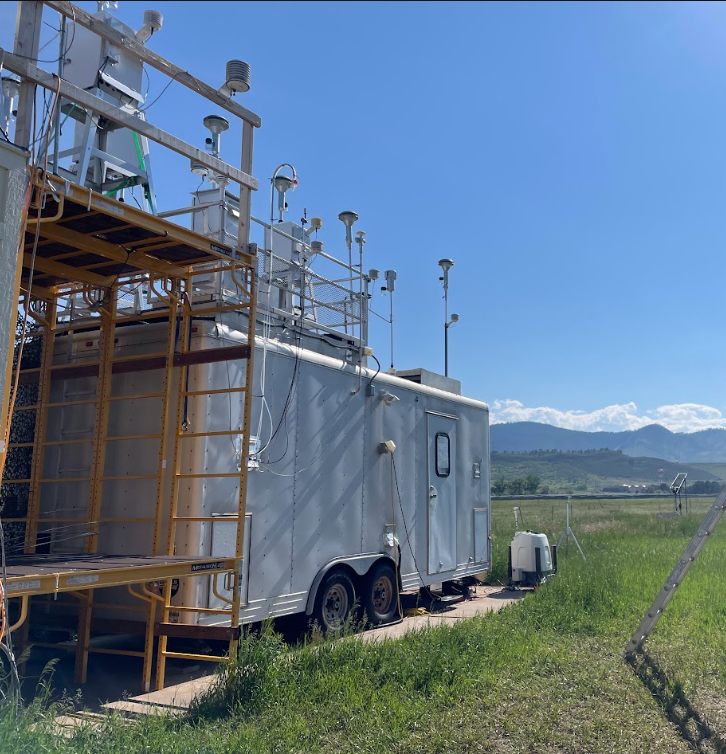
To support the air quality planning process and help identify effective strategies to reduce regional O₃, a coordinated multi-platform observational field campaign was conducted during the summer of 2025: the Front Range OZone Éxperiment (FROZÉ 2025). The project involved:
- Establishing new regulatory measurements of NOₓ and NOᵧ across the region
- Conducting speciated VOC monitoring during summer 2025 at four locations
- Performing mobile monitoring measurements of O₃ and its precursors between stations and in disproportionately impacted communities (DICs)
- Analyzing TEMPO satellite observations over the region
FROZÉ 2025 is a collaboration between CSU, the University of Montana, CDPHE, and RAQC, and is funded by the Colorado Air Quality Enterprise.